Day 28: Designing an Impossible Business
There’s a conference talk about bootstrapping that’s been making the rounds (I discovered it through Patrick McKenzie’s comment on Michael Lynch’s Hacker News post):
Designing the Ideal Bootstrapped Business by Jason Cohen
The talk is from 2013, but it’s still just as relevant today. Jason’s thesis around creating a sustainable business seems basically timeless:
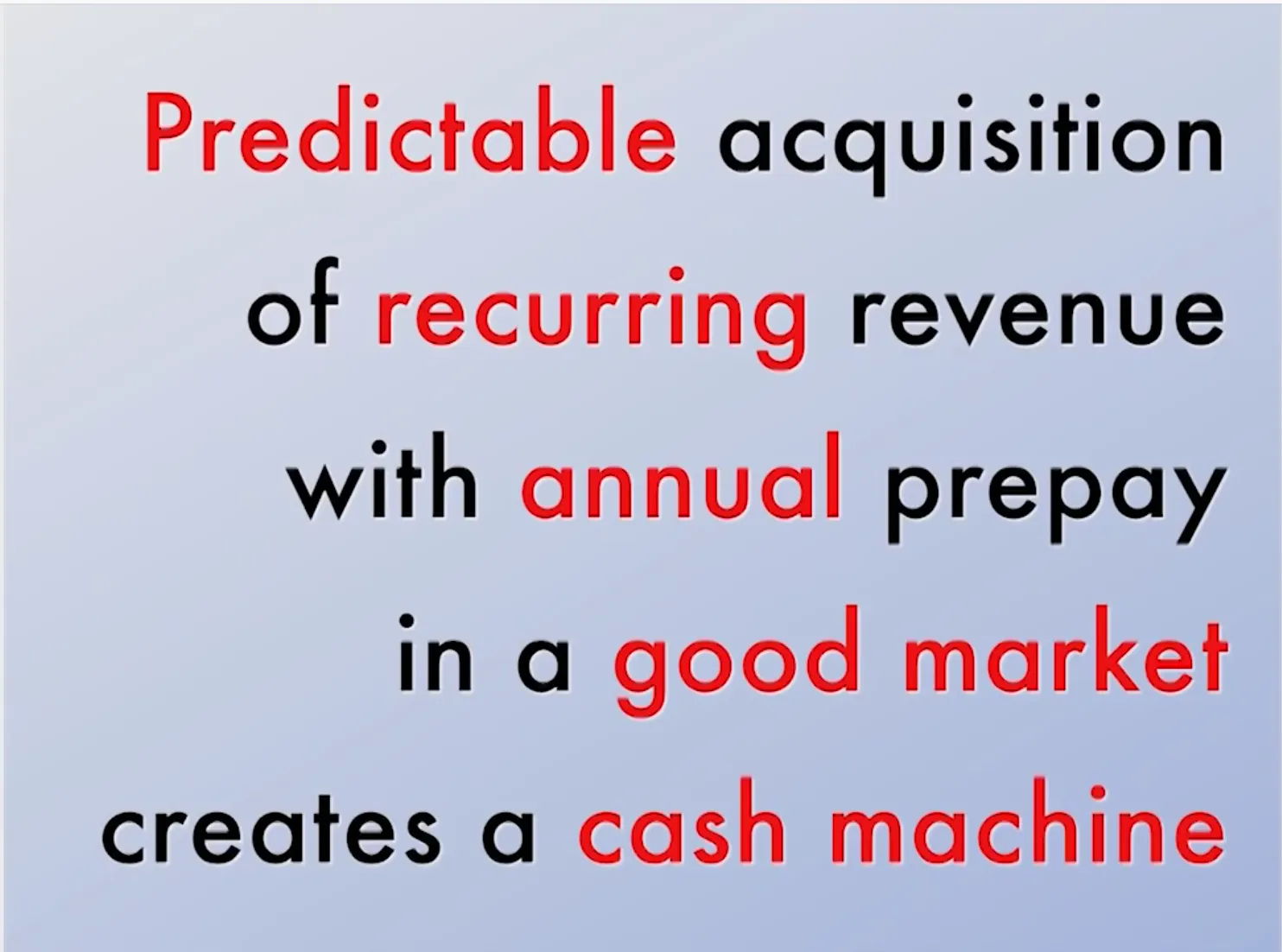
Let’s briefly break this down.
Predictable acquisition (42:35)
Jason recommends finding a marketing channel where you know with confidence you’re making more than you’re spending. For example, if it costs you $100 ads to acquire 1 customer who will pay you $150, your marketing budget is basically unlimited (until you’ve exhausted that channel) because you’re getting back $1.50 for every $1 you put in. He doesn’t think social media is a good acquisition channel because it’s hard and not repeatable.
of recurring revenue (3:20)
This concept’s simple and it’s one I’ve talked about before: Recurring revenue is more predictable than one-off payments. With recurring revenue, you don’t need to worry about making new sales every single month to keep the lights on.
with annual prepay (13:31)
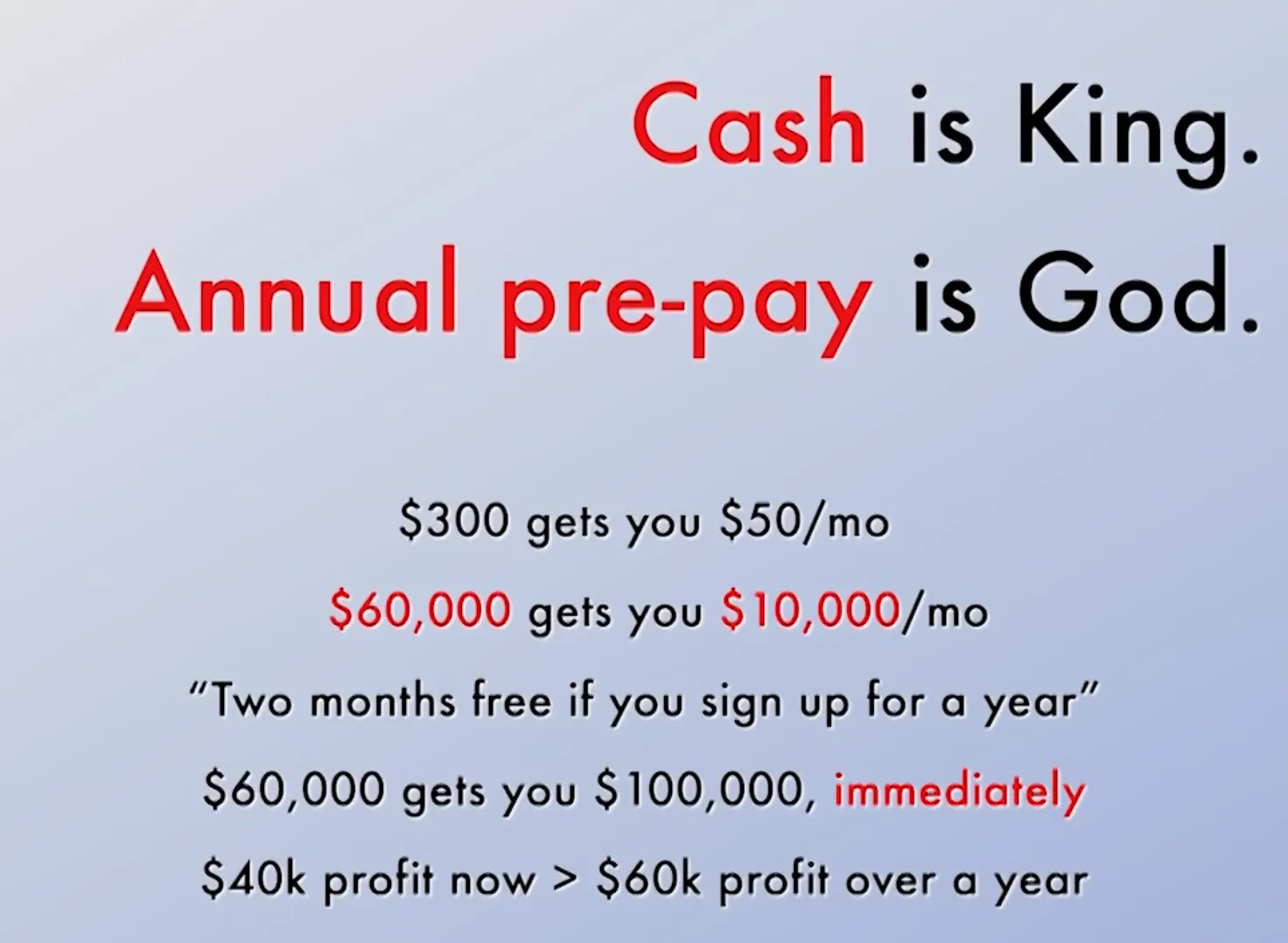
Jason strongly recommends encouraging people to prepay for a year rather than pay monthly, even if the total revenue from monthly payments would be higher. Let’s say a service costs $10 a month, but if you prepay for a year, you get 2 months free for a total cost of $100. The idea is that $100 now is better than $120 over a year because you can spend that $100 immediately on advertising, growing your business, or (in Jason’s words) “hiring a designer finally so [your product] doesn’t look like ass”. (Guilty! 🙋🏽♂️)
in a good market
Some of Jason’s pointers for finding a good market for bootstrapped businesses:
-
Selling to businesses > selling to consumers (24:25)
- “I want to make the very strong argument that you should absolutely never sell to consumers” - Jason
- Businesses will pay the big bucks; consumers will complain about any cost
-
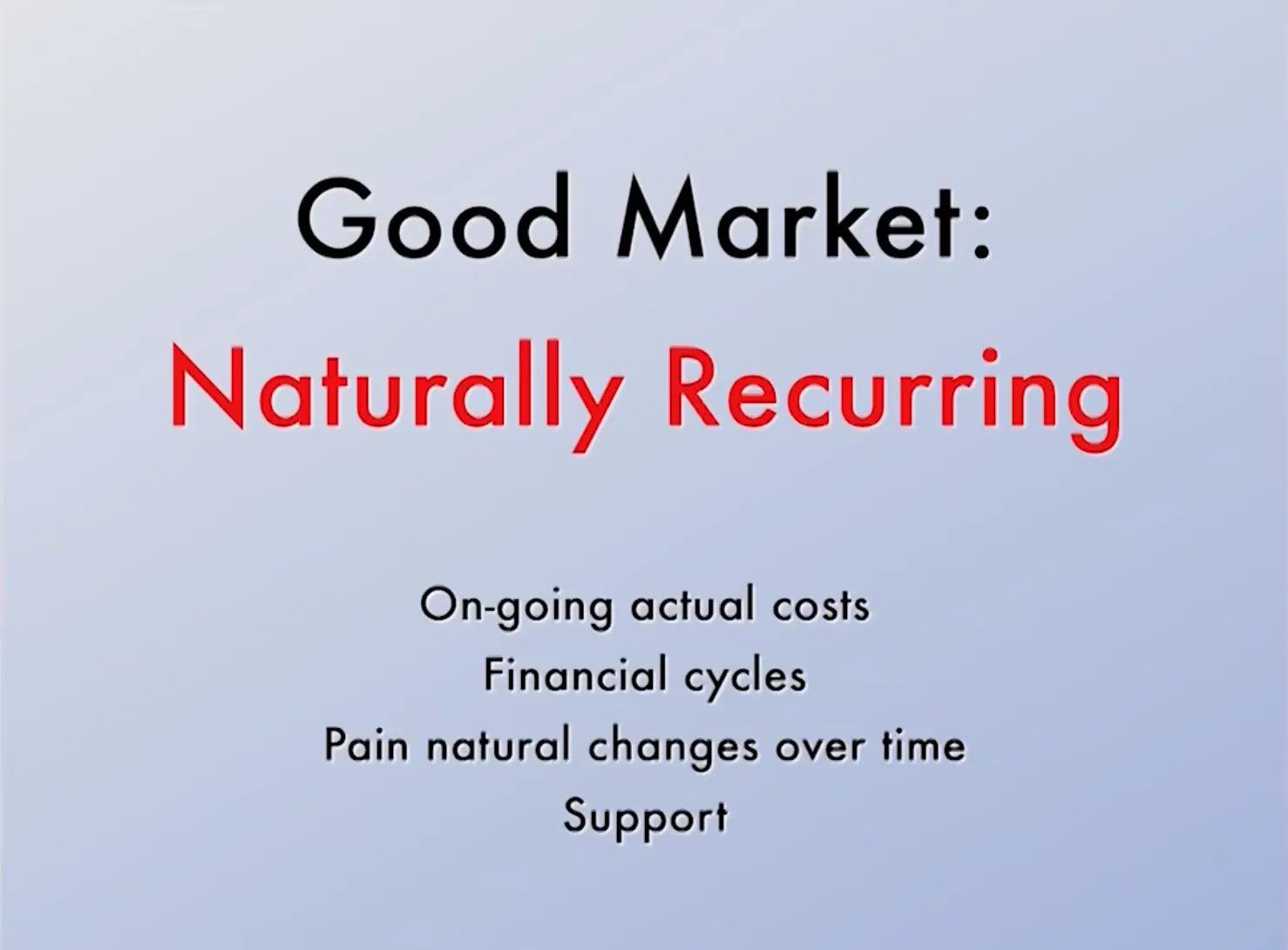
Solving a naturally recurring problem > solving a temporary pain (26:39)
-
Hard to get repeat business if solving a problem once is sufficient
-
Example:
- Web hosting that businesses depend on every month = 👍🏽
- Tool that converts wedding photos into videos that people will use once (or maybe a few times if you’re lucky and their marriages repeatedly fall apart) = 👎🏽
-
-
Solutions that can be “done” > solutions that require ongoing development (36:05)
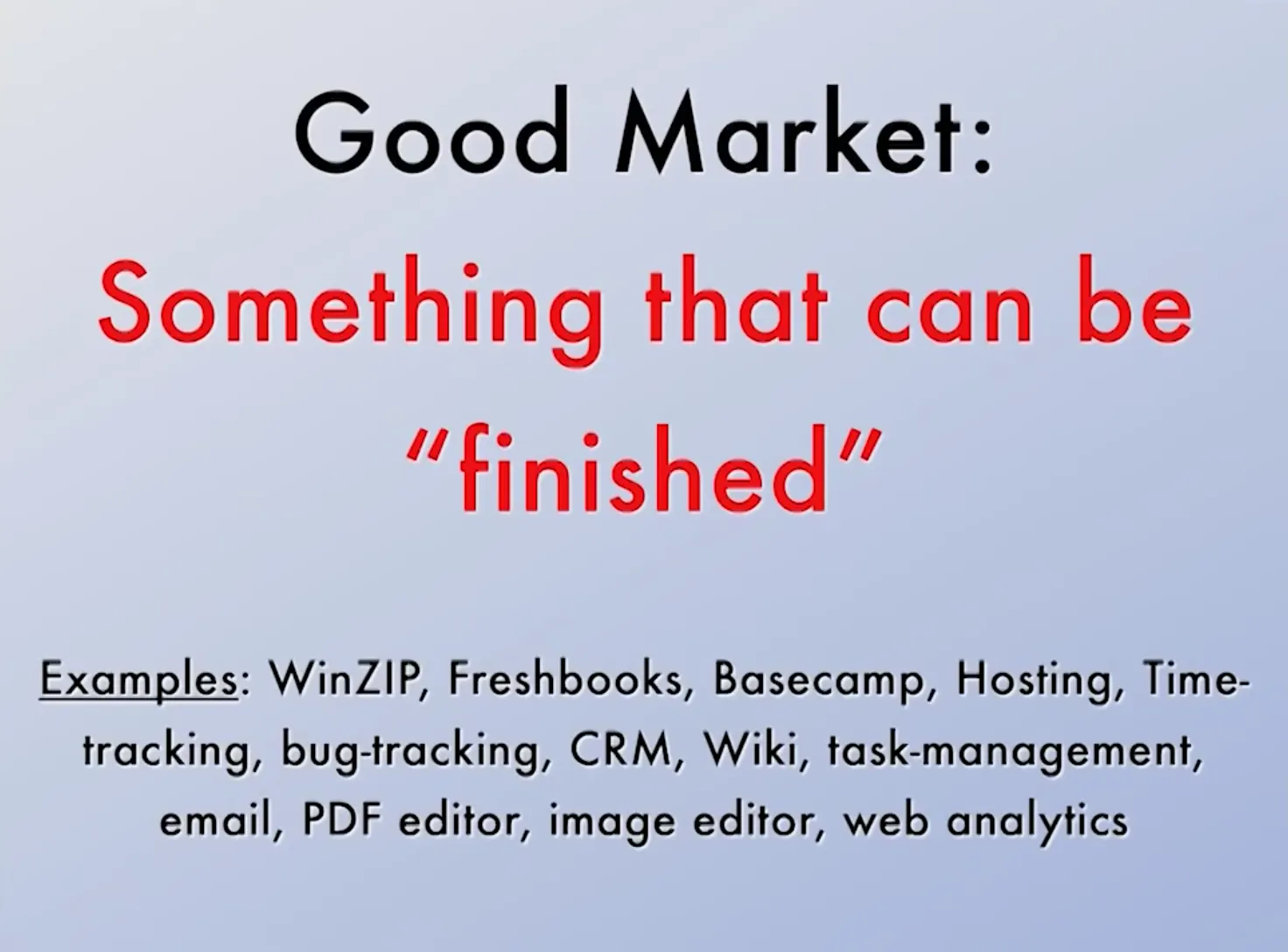
- You don’t want to enter a feature war with a competitor because you’re strapped for resources as a bootstrapped business
-
Big market > small market (40:09)
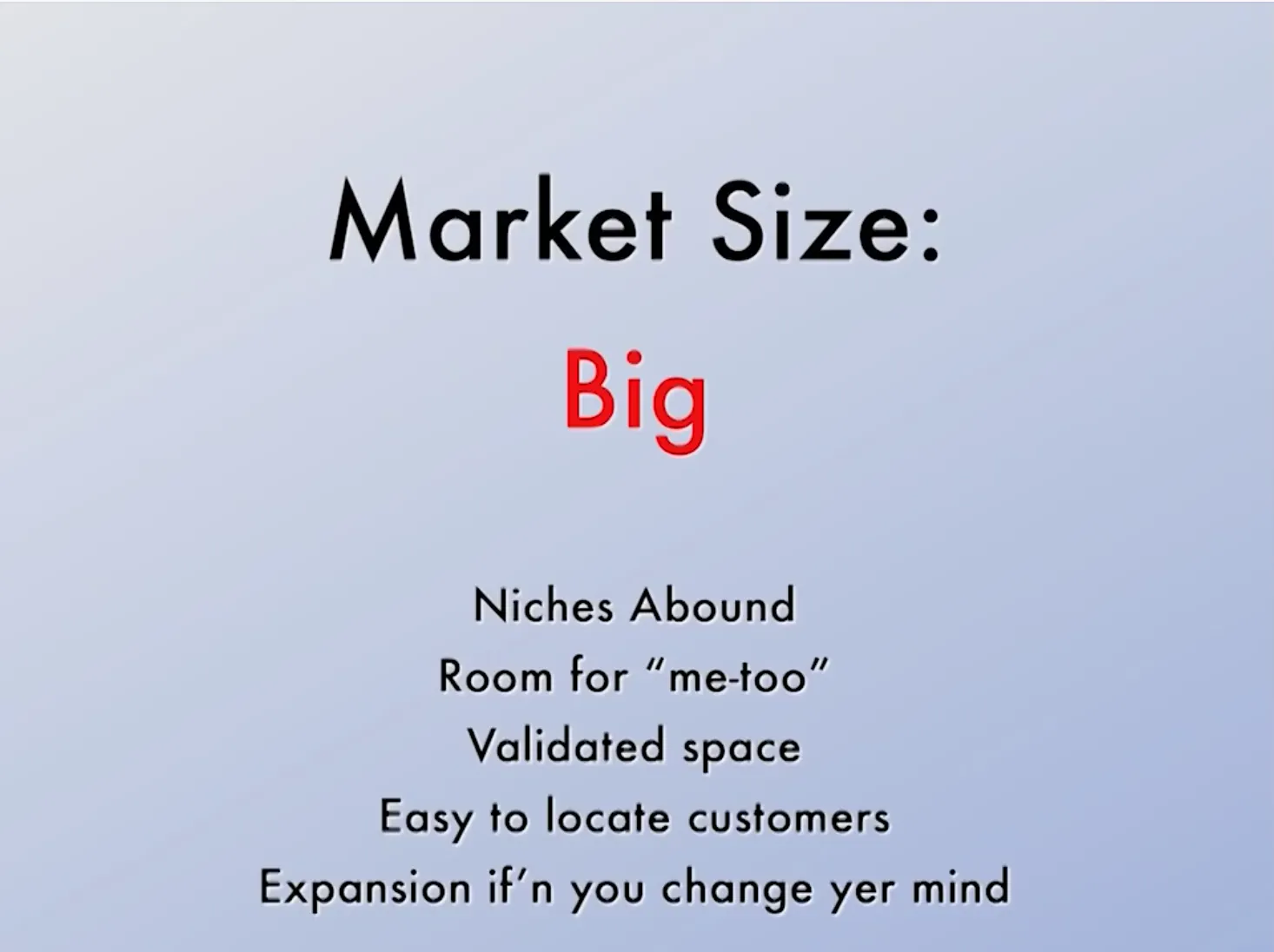
- You can enter lots of niches rather than pigeonholing yourself into one
creates a cash machine
Doing all of the above = 💰💰💰
There’s a lot more in the talk about real-time markets (32:34), marketplaces (34:29), after-markets (37:09), marketing and pricing tips, and lots of examples throughout so I’d recommend watching the whole thing because it’s a great talk.
How does all this apply to what I’m doing with Hide Feed? The thought that repeatedly occurred to me throughout the talk was “oh, I’m doing exactly what he’s saying not to do”.
-
Jason: Don’t sell to consumers
- Hide Feed: Consumer product. Not only is it a consumer product, but it’s a browser extension which most people can’t fathom paying for.
-
Jason: Create a boutique product you can charge a lot for ($50/month+)
- Hide Feed: Probably going to charge ~$5/month
-
Jason: Target a big market
- Hide Feed: Targeted at the intersection of people who (frequently visits sites with feeds on their laptop) & (value their attention and time enough to care about modifying sites to hide distractions) & (willing to pay).
I’m not going against his advice because I think that Jason’s wrong about this stuff; pretty much everything he said makes sense. Building a Chrome extension for consumers seems like selecting Impossible Mode in the welcome screen for the Build a Sustainable Business RPG. You’re betting on being the exception to the sea of dead code bases. So if I think that I’d significantly increase my chances of making a successful business by doing something else, why am I working on Hide Feed and other tools related to digital well-being?
The main reason is that my goal isn’t just to create a successful business. In the description for Road to Ramen (this journal), I state that the question I’m exploring is: Can I make a living building things I love? The key part of that question is not the first part about making a living; it’s the “building things I love”.
For me, this journey isn’t about money; if it were, I’d go back to Google or some other tech company where making $300,000+ a year is the norm. It’s not just about independence, either; whether I was my own boss or not wouldn’t matter if I spent my time solving problems I didn’t really care about.
This is why I’m knowingly going against what I know to be sound advice for building a business. Talking to businesses to discover their pain points and create a solution that helps them with their accounting, invoicing, hosting, analytics, [insert business problem here] would significantly increase my chances of finding customers who are willing pay significant amounts, but I don’t think I’d be thrilled to spend my Friday night thinking about “how can I help this company make more money, cut costs, streamline their business processes, etc.?”
I want to see whether I can make a living working on things I truly love like helping people spend their time better and live more fulfilling lives, not things that I can tolerate or things that I can sort of get myself excited about. Part of this is due to a strange degree of self-belief; instead of impostor syndrome, I suffer from special snowflake syndrome, where I believe that I could be the exception and succeed where many others have failed.
Perhaps reality will crash down on my delusions of grandeur and crush my idealistic notions around being able to succeed at this on my own terms, but what’s the fun if I don’t try?