Day 113: Why Intention is closed source
One recurring request I get is to publish the source code for Intention. It came up on my HN launch and frequently shows up in Intention’s feedback form. Most people are nice about it, but sometimes they’re strangely passive-aggressive:
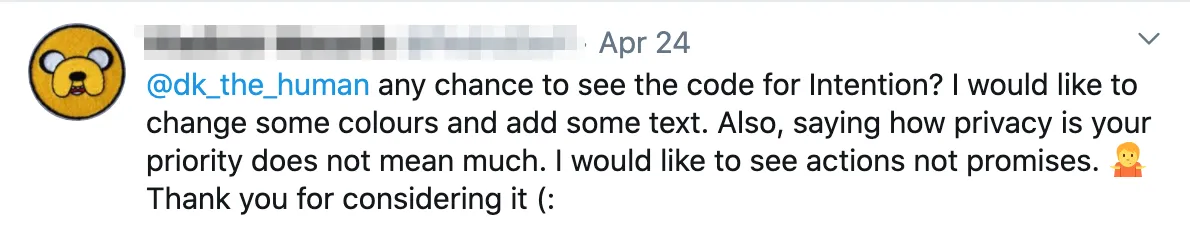
I get it. One of my first posts here was about how dangerous browser extensions can be. And there have been many, many examples of people abusing their users’ data or selling the extension to someone who then abuses their users’ data. It’s much easier to trust that an extension isn’t doing anything sketchy when you can inspect the code.
Honestly, I’d love to open source my code. This is some of the best work I’ve done, and I’m extremely proud of the code architecture and quality. My ego would love to have other people tell me how clean my code is or use the patterns and components I’ve developed.
But I also want to make working on Intention financially sustainable. I’m currently devoting 100% of my time to building Intention to help people spend their time well and be mindful with their digital experiences, and I’d love to make a living doing that.
Creating a paid tier that works would be in the best interest of my users long-term:
- Being able to work on this full-time means having more time to fix bugs, add functionality, improve the product, and build for mobile
- Being paid by my users aligns my interests with theirs, and they wouldn’t have to worry about Intention following the unfortunately well-trodden path of being abandoned or doing sketchy things with their data
Ideally, I’d be able to open source my code and be able to make a living off of my work. But that unfortunately doesn’t seem possible for this kind of product.
If Intention were open-source, I wouldn’t be able to create a paid tier because anyone could trivially clone the code and publish a free version. Hell, people even clone extensions that are already free in order to inject malware (example). The only available option would be taking donations. Could that work?
Let’s take a look at an extremely popular, well-loved, free browser extension for using dark mode across all sites called Dark Reader:
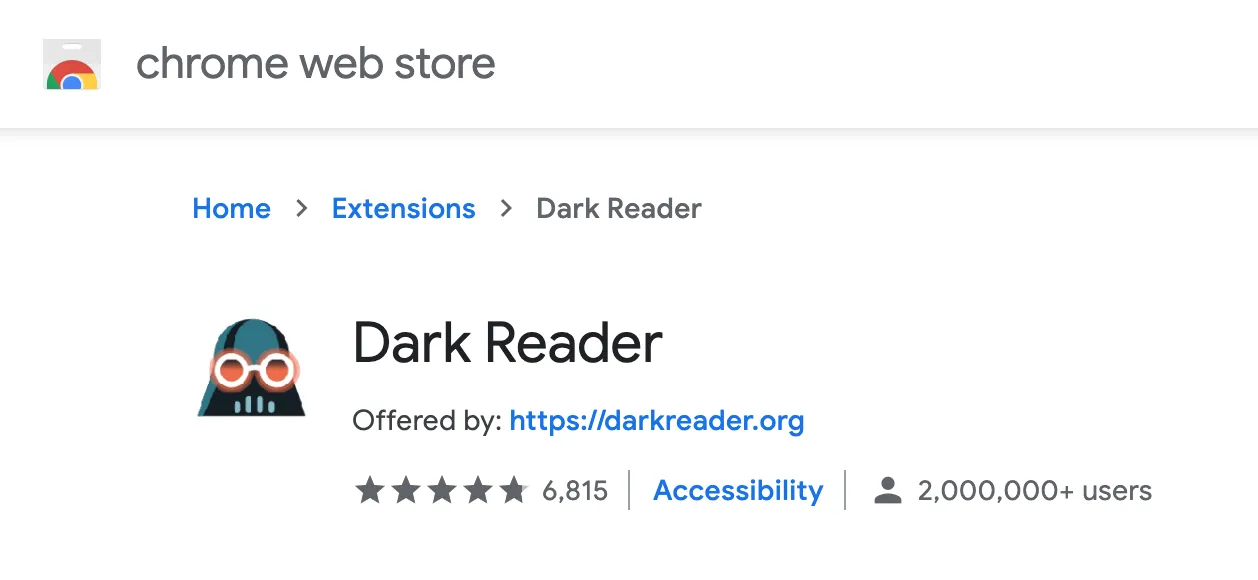
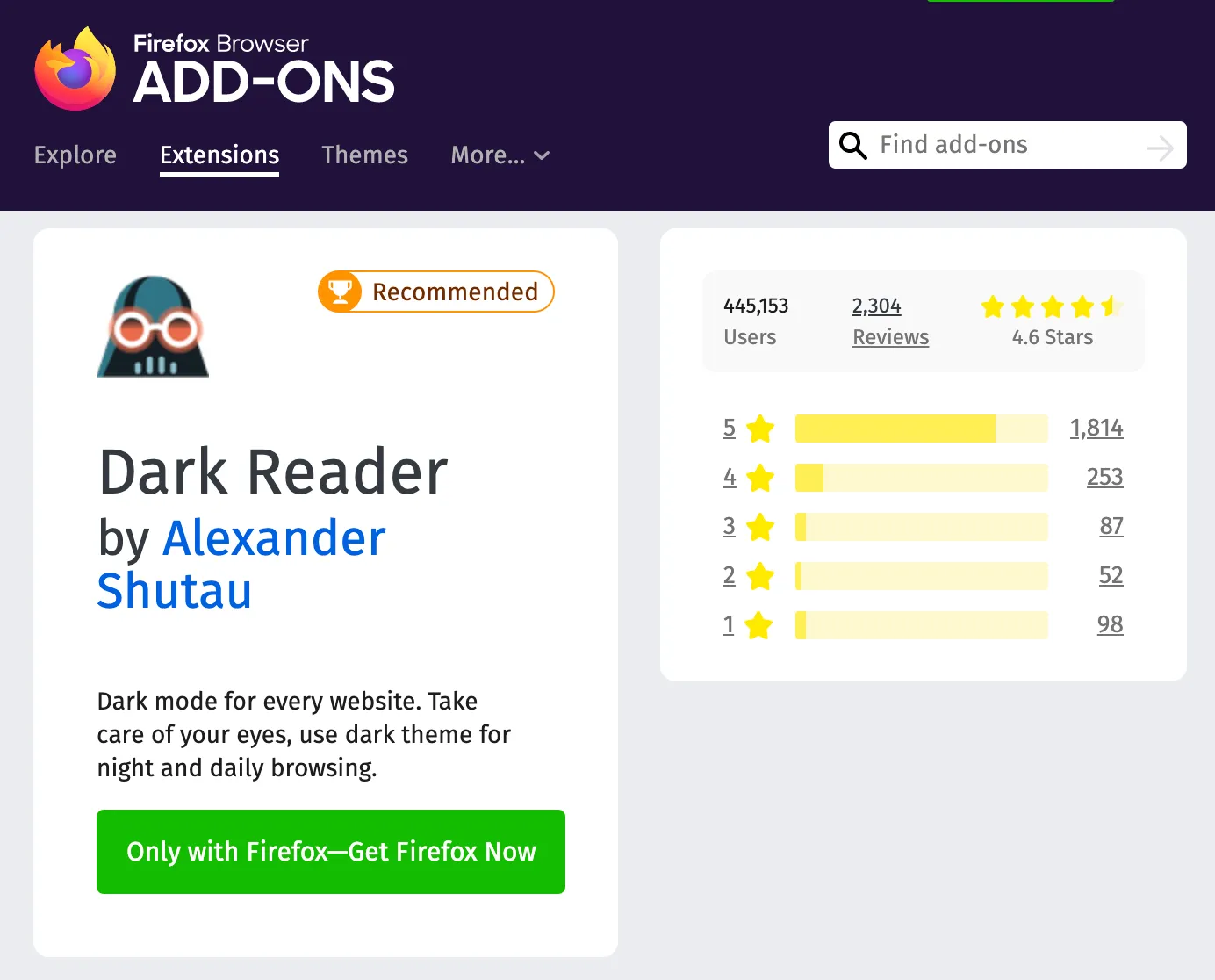
Dark Reader has anywhere between 2.45 million users and 3.4 million users (the Chrome Web Store rounds down and would show “2,000,000+ users” even if they had 2,999,999 users). Let’s take the lower bound and say that Dark Reader has 2.5 million users.
Dark Reader is open source, and it looks like the first commit was made on November 2014.
So Dark Reader has 2.5 million users and has been around for around 5 years. How much do you think it has received in donations in the past year?
If 1% of current users loved the extension enough to donate $1 a month ($12 annually), Dark Reader would’ve collected ~$300,000 in donations in the past year.
Here’s the reality:
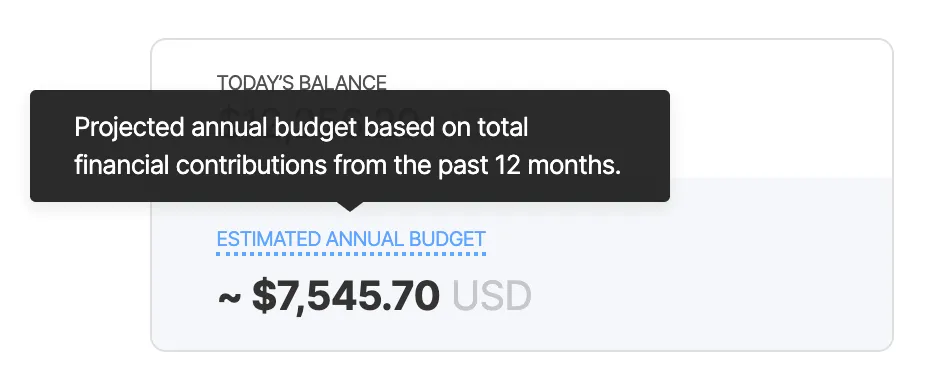
Based on the financial contributions from the past 12 months, Dark Reader has a projected annual budget of $7,545. And that’s for an extension with two and a half million users. I have no reason to believe that Intention would fare differently (and this is assuming it’d grow to millions of users!).
In a nutshell, here’s why Intention is not open source:
- I want to make working on Intention financially sustainable
- Open sourcing Intention would mean relying on donations
- Donations don’t seem financially sustainable