Day 107: Winning the HN Lottery
Sometimes, the Internet is nice to you and sends you a truckload of traffic. Today was one of those days.
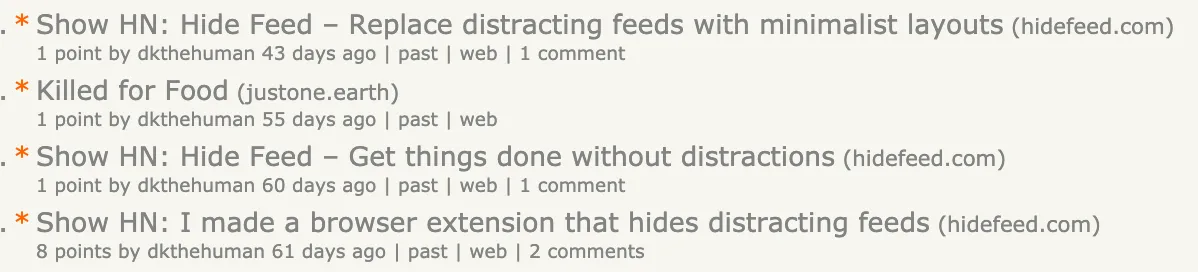
In the morning, I posted Intention on Hacker News, and it almost immediately made it to the front page. I was amazed because I had expected to repeat my experience of posting Hide Feed: Have the submission die silently, shove fistfuls of Oreos into my food hole to cope, cry myself to sleep, wait a few days, post again, and repeat the whole process a few times before giving up in a great huff:
This time, I posted and watched in disbelief as it showed up on the front page and climbed up on its own. It was the complete opposite of my experience posting on Product Hunt: On PH, I spammed all my friends and exerted a herculean amount of effort in order to get 500 visitors. On HN, I put in zero effort, spammed zero friends, and had thousands of people show up. Nice.
It was especially fun watching HN today because Michael, a friend who’s also in Show & Tell, posted an incredible blog post analyzing Stripe’s behavior on his site and for a while, we shared the #1 and #2 spots:

I hung out on my Hacker News thread for much of the day responding to comments, and it was especially gratifying to see two themes in the comments:
- Appreciation for the focus on privacy
- Desire to pay
Privacy
As I wrote here over 100 days ago, browser extensions are downright scary. Most of them ask for permissions that they don’t need, and they do so without explaining why. This is a problem that needs to be solved at the platform level by the teams behind Chrome, Firefox, etc. They need to ban the granting of permissions at install-time and require extensions to ask for permissions at run-time. We’ve already figured this out on iOS and Android, and it seems like the only thing that’s preventing this change is a lack of investment in desktop browser extensions.
In order to safeguard my users’ data and privacy as much as possible, I designed Intention to request the bare minimum permissions and only do so when the user explicitly selects a site to add to their list of distractions. That work wasn’t trivial — if you request permissions at run-time, you have to consider many more edge cases and build extra screens and flows to explain and ask for each permission. It is much, much easier to just ask for a bunch of permissions at install-time because you can assume in the rest of your code that you have all the permissions you need.
And for non-technical users, the privacy-oriented approach can appear less private than the common approach of asking for overly broad permissions upfront because there are many more instances of permissions being requested.
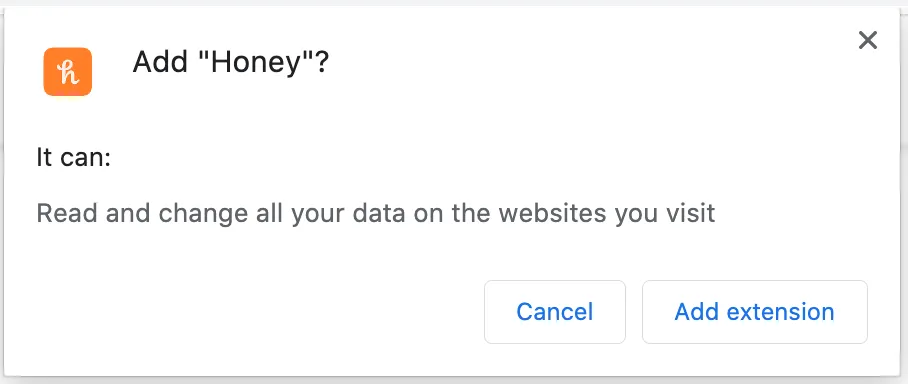
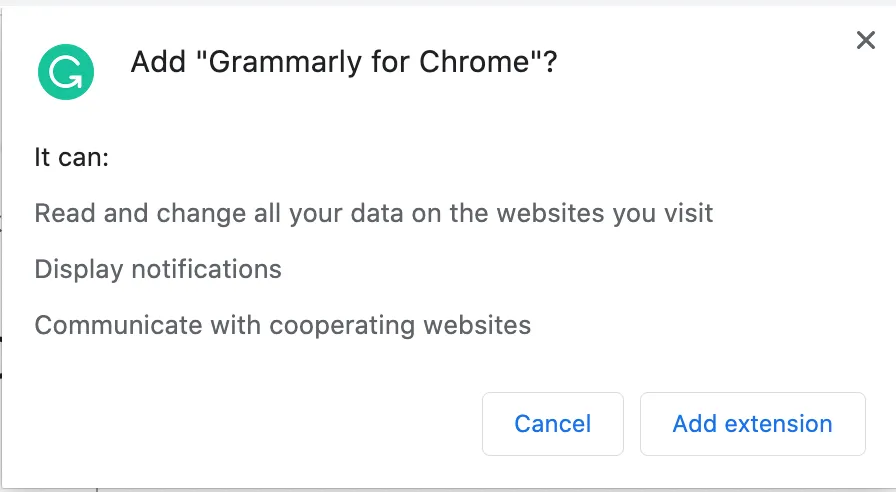
When I invested all that time and effort into getting the permissions right, I wasn’t sure whether anyone would care. I did it because I want to move us toward a world where our tools are designed to serve us and not guzzle up data so that we can be targeted with better advertisements, but maybe it’d matter to no one but me. After all, the biggest extensions like Honey and Grammarly have tens of millions of users, and they ask for the broadest permissions possible upfront:
My experience today showed me that, in fact, there are others who care about this stuff:







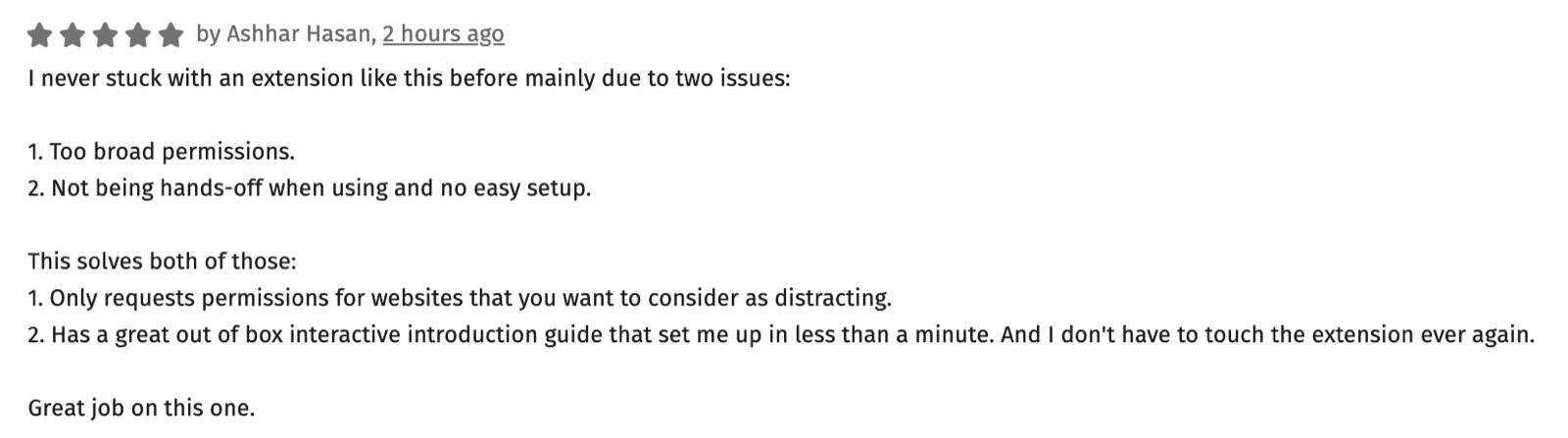
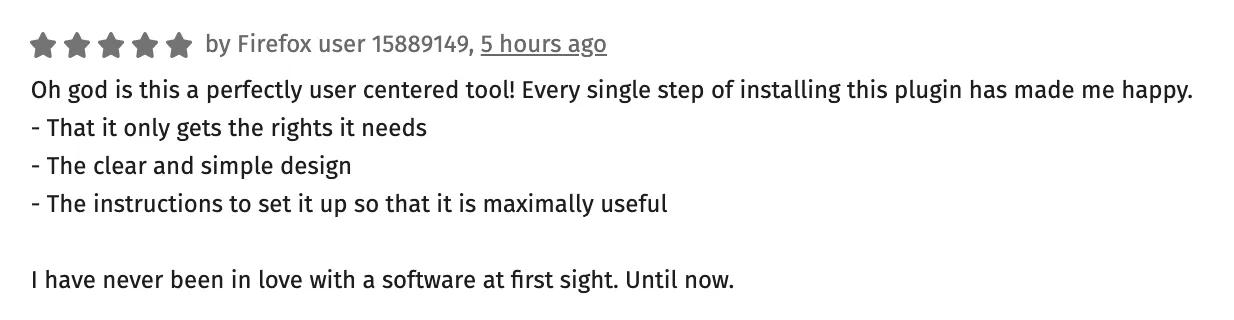
Now, I’m under no delusion that this is representative of all users or even a major percentage of users. The vast majority of people don’t care and probably won’t ever care about the distinctions between broad vs. narrow permissions and install-time vs run-time requests. It might even still be the case that there are more casual users who uninstall the extension because the granular approach appears overly invasive than technical users who understand and appreciate it. Even so, finding this vocal minority who cares was greatly gratifying.
Ca$h monies
Several comments expressed their willingness to pay:
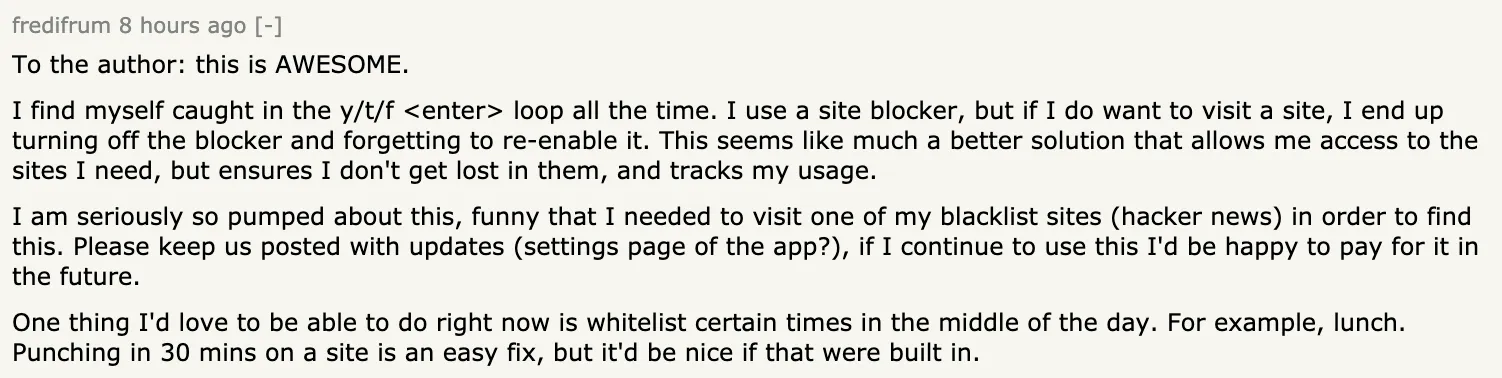
Same disclaimer as before: Definitely not representative because most people reeeaaaaallly don’t like paying. Especially for browser extensions. And most of the time, even people who say they’d pay have a sudden change of heart once there’s a form to put in those CC digits.
But! I think it’s a really good sign that some people find the product compelling enough that it strikes them as something worth paying for. It’s also worth noting that the people who care about privacy are the ones who are most willing to pay. I wouldn’t be surprised if it’s because they’re aware that a product being free usually means (a) it won’t be maintained or (b) will sell their data or (c) will sell out to someone who will sell their data (see Stylish).
Having made it to the front page of HN before, I know that this traffic boost will disappear as quickly as it showed up, but I’m incredibly grateful for the outpouring of encouragement and appreciation from Hacker News today.
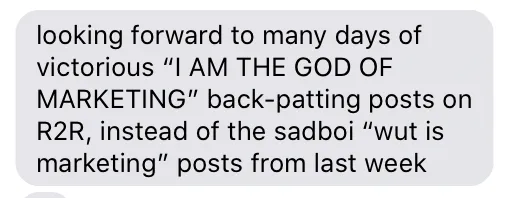
Or, in other words:
I AM THE GOD OF MARKETING
P.S. Oh yeah, almost forgot to mention. I was getting rave reviews on Firefox all day long but didn’t hear a peep from the Chrome Web Store. Later I learned it was because Google had shut down the review system:

wat