Day 479: Features Do Not Win
Zapier
-
Founded in 2011 in Columbia, Missouri
-
Revenue: ~$100 million annually
- The Information describes $4 billion as “at least 40 times [Zapier’s] annualized revenue” so we’ll assume in the ballpark of $100 million
- Drift has a recent blog post describing Zapier as having $50 million in ARR, but that number is from 2018
-
Valuation: $5 billion+ in March 2021 (source
Integromat
-
Founded in 2012 in Prague, Czech Republic
-
Revenue: ~$10 million annually (source)
-
Acquired for “a three-digit amount of over $100 million” in October 2020 (source)
- Given the article puts their ARR at around $10 million, let’s assume a valuation of between 10x to 20x and say they were acquired for somewhere between $100M - $200M
These two companies have been around for roughly the same amount of time, but one has 10x the revenue and a valuation 25x to 50x the other. Zapier must clearly have the better product, right?
Not quite.
Given I’m trying to build a browser automation tool that’s accessible to non-technical folks, I’ve spent quite a bit of time playing around with both Zapier and Integromat to learn about what works well. And I was surprised to find that between the two products, Integromat is way more powerful.
Example #1: Finding a row in a spreadsheet
Say you want to update an item in a spreadsheet. First, you need to figure out the row of the item you want to update.
In Zapier, you’d use a “Lookup Spreadsheet Row” action which would locate the row that contains a particular value for a given column:
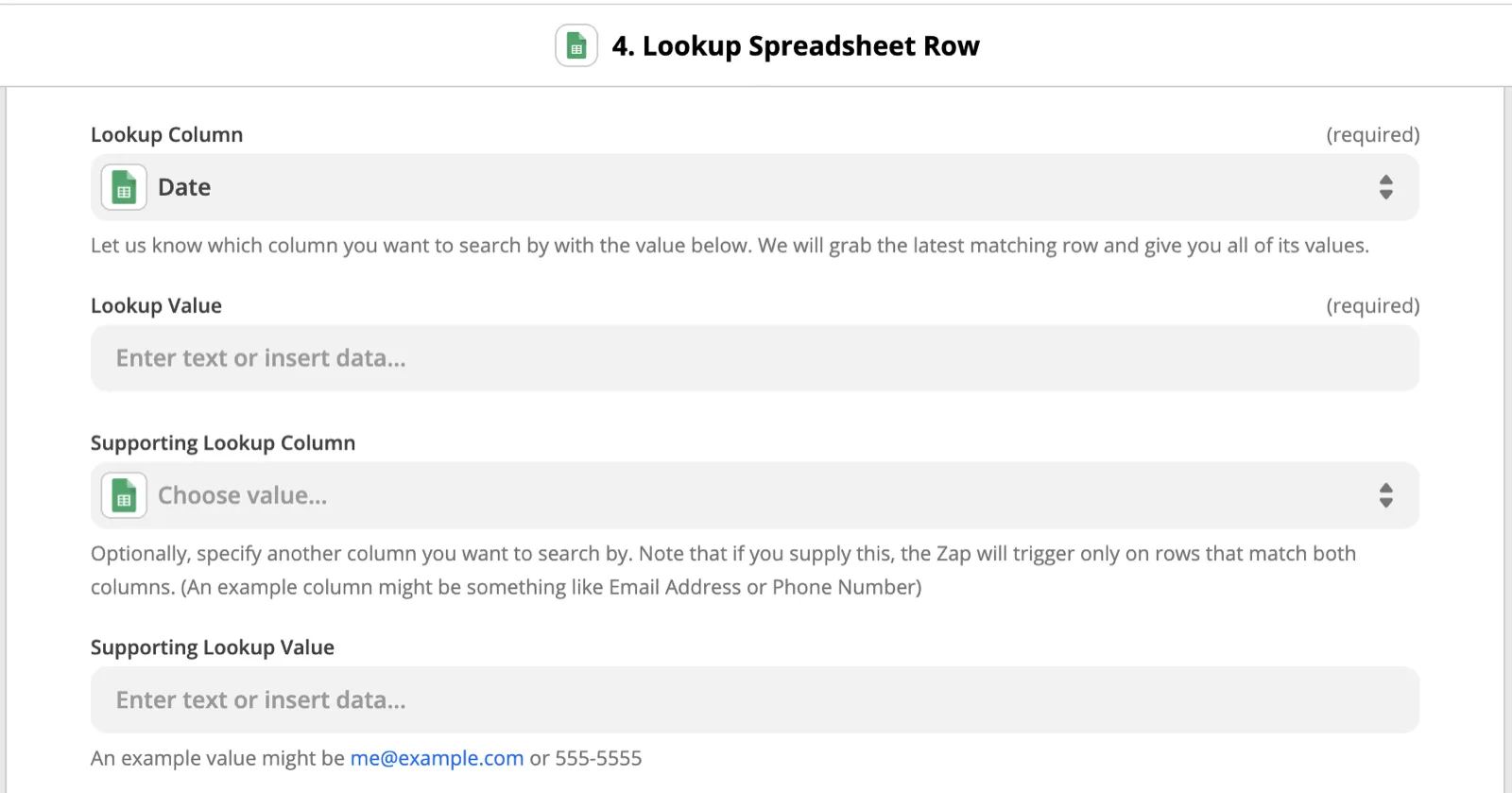
And as far as I can tell, that’s the only way you can lookup the row. You can optionally specify another column, but that needs to be an exact match as well. Want to find the first item that has a value greater than a certain number? Nope. Want to find the first item with a timestamp before a particular date? Can’t do it.
Compare that to Integromat, which has a “Search Rows” module that lets you specify an arbitrary number of conditions that can be combined using AND and OR rules:
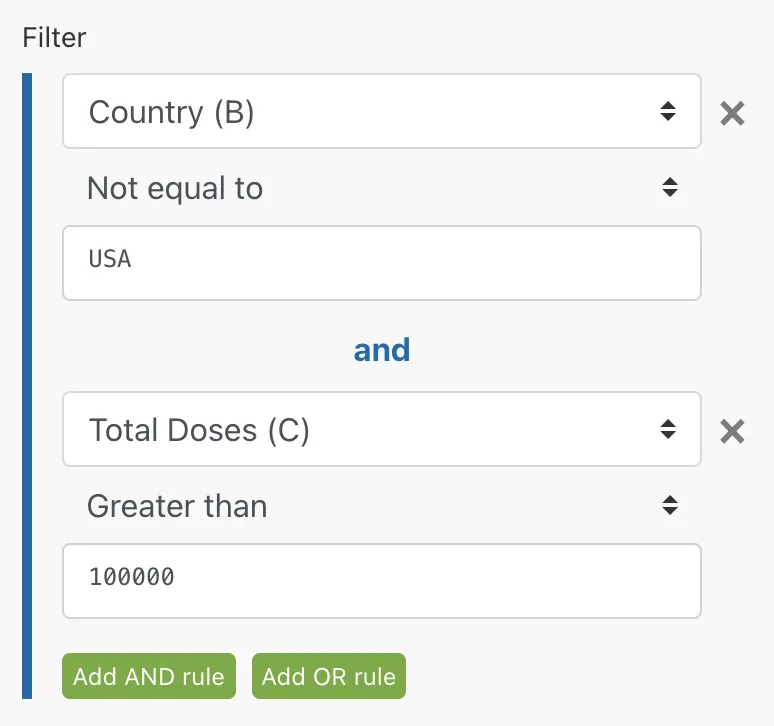
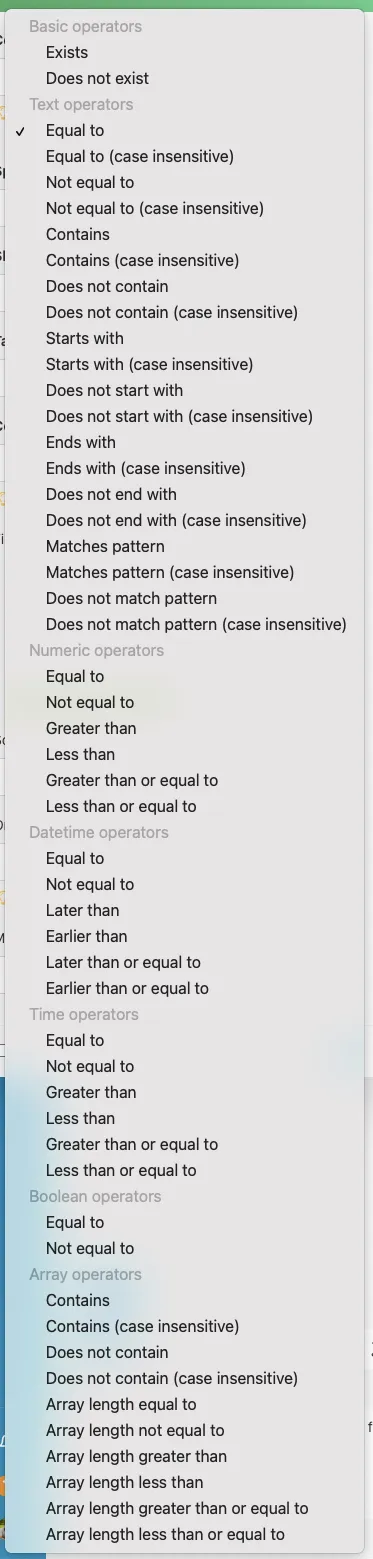
The conditions support a ridiculous number of ways to compare values. The list is so expansive that I need to hide it by default or else it’d take up the whole page:
Expand if you like scrolling
Example #2: Scheduling an automation
Say you want to schedule an automation to run regularly. With Zapier, you can choose between the following options:
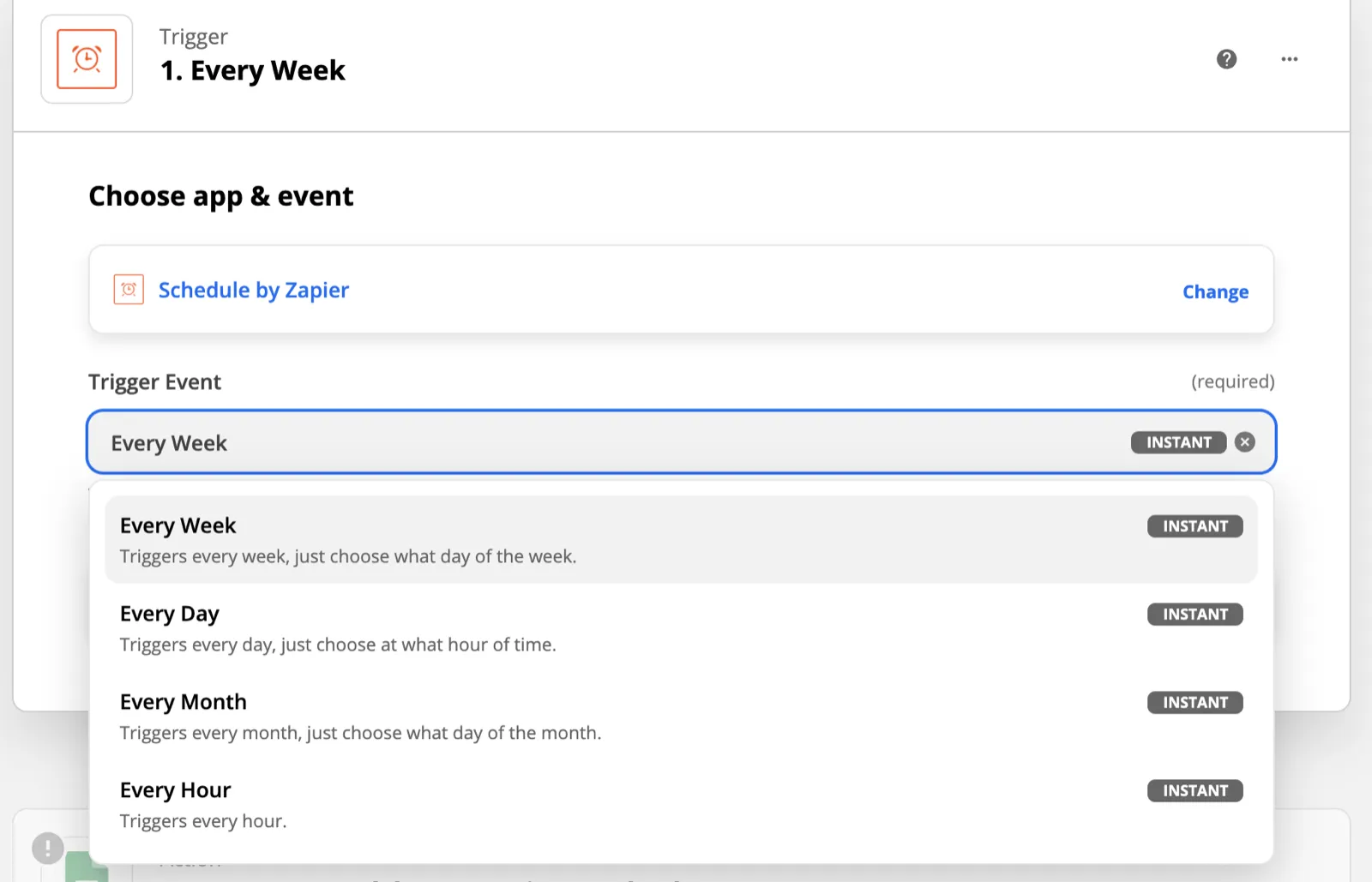
Anything more complicated (e.g. running an automation on certain days of the week rather than on a single day) either requires workarounds or is not possible.
Compare that to Integromat which lets you specify anything from scheduling an automation a single time to arbitrary months and days:
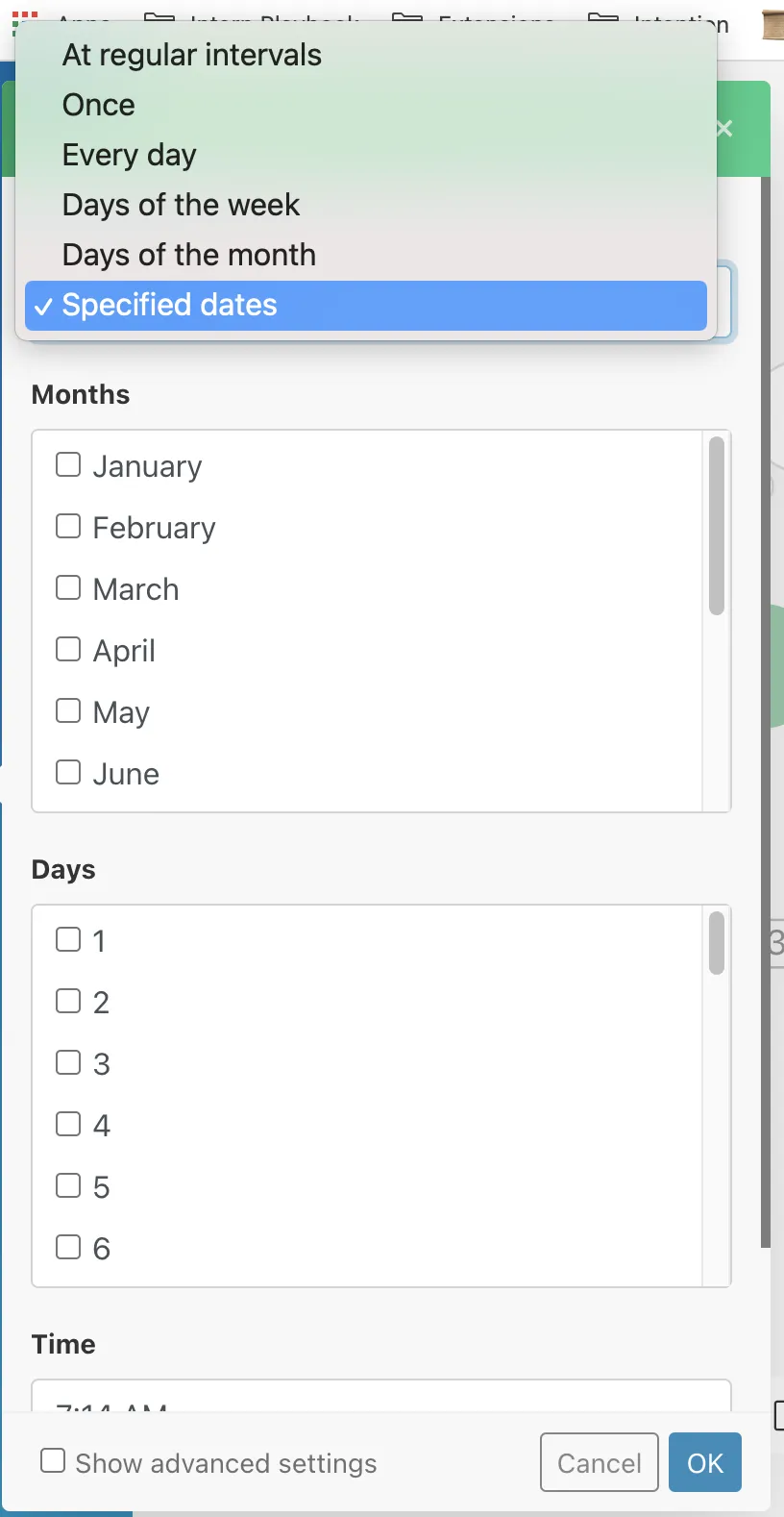
This difference in flexibility exists across every aspect of these products, from having access to detailed logs to the ability to conditionally split off your automation down various paths. Integromat is much more fully featured and allows automating workflows that simply aren’t possible with Zapier.
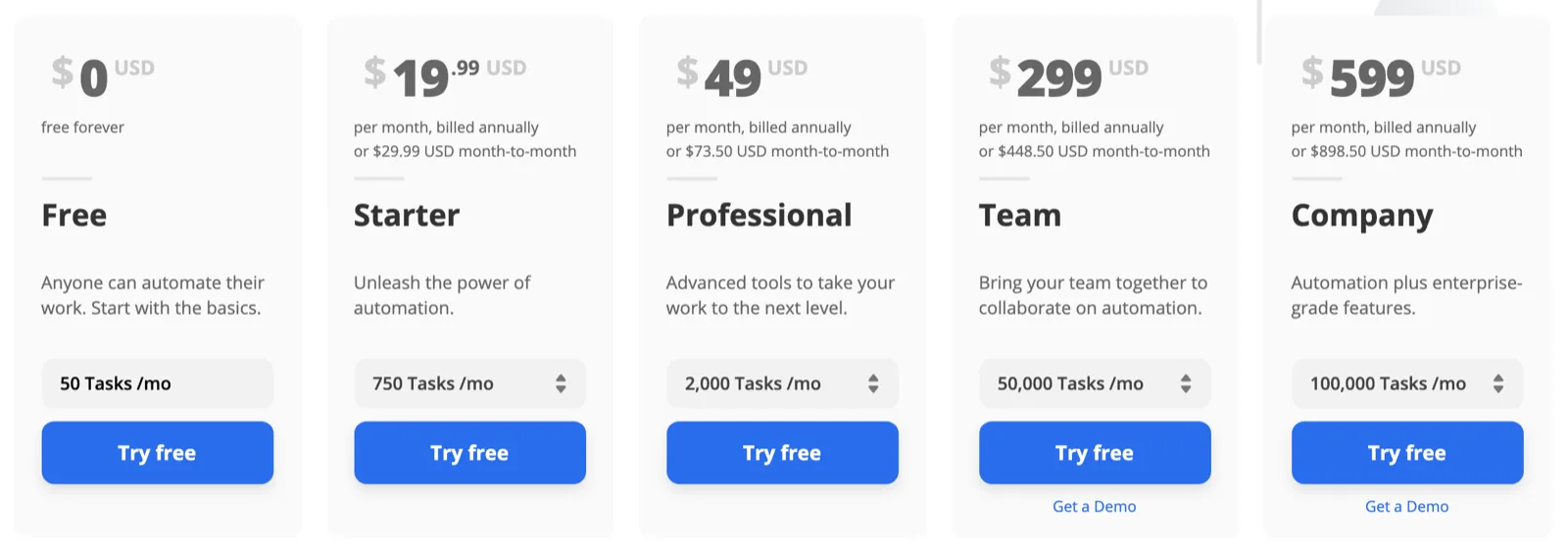
Not to mention, Integromat is much more affordable than Zapier.
Zapier’s pricing:
Integromat’s pricing:
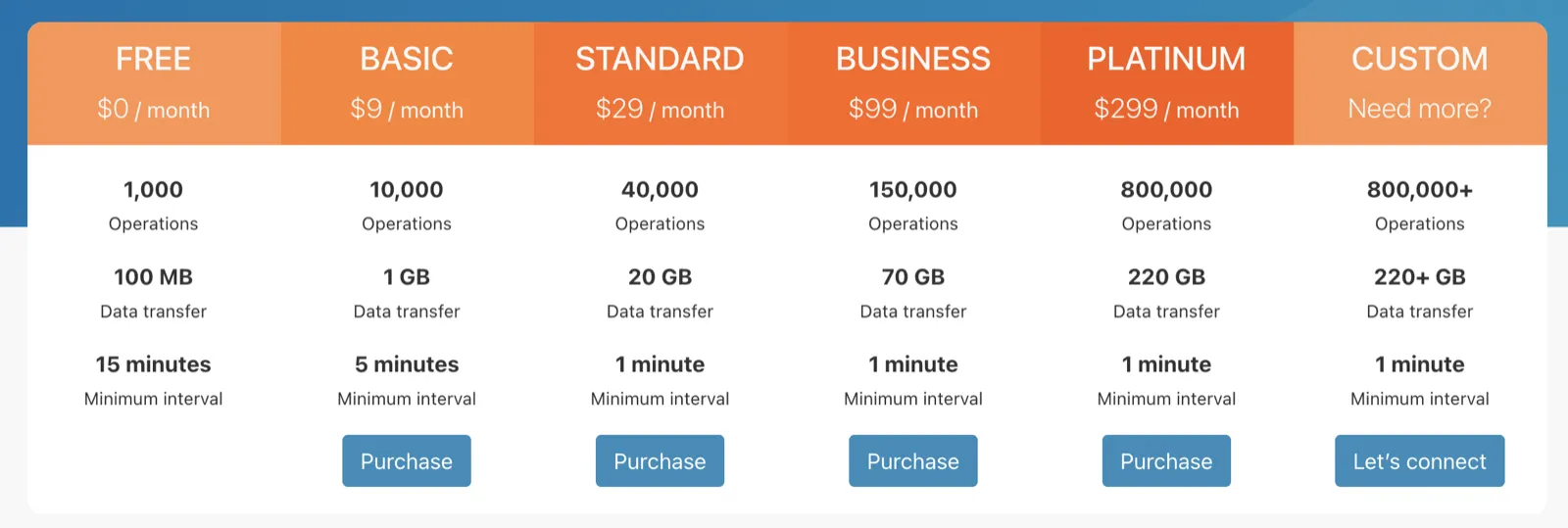
Zapier’s “tasks” and Integromat’s “operations” have subtle differences, but they’re close enough for our purpose of comparing pricing plans.
Integromat’s cheapest plan comes at $9 a month for running 10,000 operations. Using the same number of tasks requires paying $129 a month on Zapier’s Professional plan.
In summary, Integromat is more powerful, more flexible, and much cheaper.
And yet, Zapier is the clear market leader when it comes to no-code automation and the one valued at $5 billion.
Why?
Because Zapier’s feature set is good enough.
It might not be able to automate complex workflows in the way that Integromat can, but it’s extremely good at handling most of the ones that people want. It’s the Pareto principle at play — most people will want only a small fraction of all possible features, and serving those needs well is sufficient for winning them as customers.
And importantly, Zapier’s smaller set of features gives it a great strength: simplicity. While Integromat can do everything Zapier can and more, Zapier is much easier to use, which is one of the reasons why Zapier has done so well.
Given that I’ve spent so much time and effort making Browserflow powerful and flexible so that it can support any use case, there’s lesson for me to learn here. I don’t need to build every feature under the sun — build something simple that solves a lot of people’s problems well, and then focus on distribution.
(And important to note in case it feels like I’m saying Integromat “lost” and is not worth emulating: Integromat is hugely successful in the automation space, they have a sick product, and a $100M+ exit is obviously incredible. It was just surprising to me that Zapier has had so much more success comparatively despite being much more limited in functionality compared to Integromat.)