Day 13: Bribing Strangers with Protein Bars
You’re reading part 2 of my User Testing for Indie Makers series:
- Part 1: User Test or Die (Why User Testing Matters)
- Part 2: Bribing Strangers with Protein Bars (How to Get Users for Testing)
- Part 3: What I Got Wrong About Hide Feed (What I Learned from User Testing)
- Part 4: User Testing Best Practices
Let me take you back to a day in my life as a product manager on Google Maps. My UX and engineering leads are gathered in a room on the 44th floor of Roppongi Hills Mori Tower, the Tokyo skyscraper that held the Google Japan office. We watch intently as our UX researcher guides a handful of people into a room designed so that we can see and hear them but not the other way around. She asks them carefully crafted questions to understand what kind of users they are and has them play around with prototypes to see what they think about a new Google Maps design we’re developing. Completely invisible to the research participants, we grin as they talk about how much they love some part of the design we were excited about and grimace when they miss a core flow that we thought was obvious. At the end of the session, we gather to discuss what we learned and our UX leads start developing a presentation to share the findings with the rest of the team.
Two and a half years later, I’m trying to figure out how to set up user testing outside the comfort of a multi-billion dollar corporation. I no longer have the UX researcher who knows exactly what to ask and how to ask it, the fancy rooms fitted with one-way mirrors and cameras, and the army of willing test volunteers who are more than happy to spend hours getting an inside look at what’s happening at their favorite company. Heck, I have a hard enough time getting my friends to try my stuff for 15 minutes. What’s an indie maker to do?
You get scrappy.
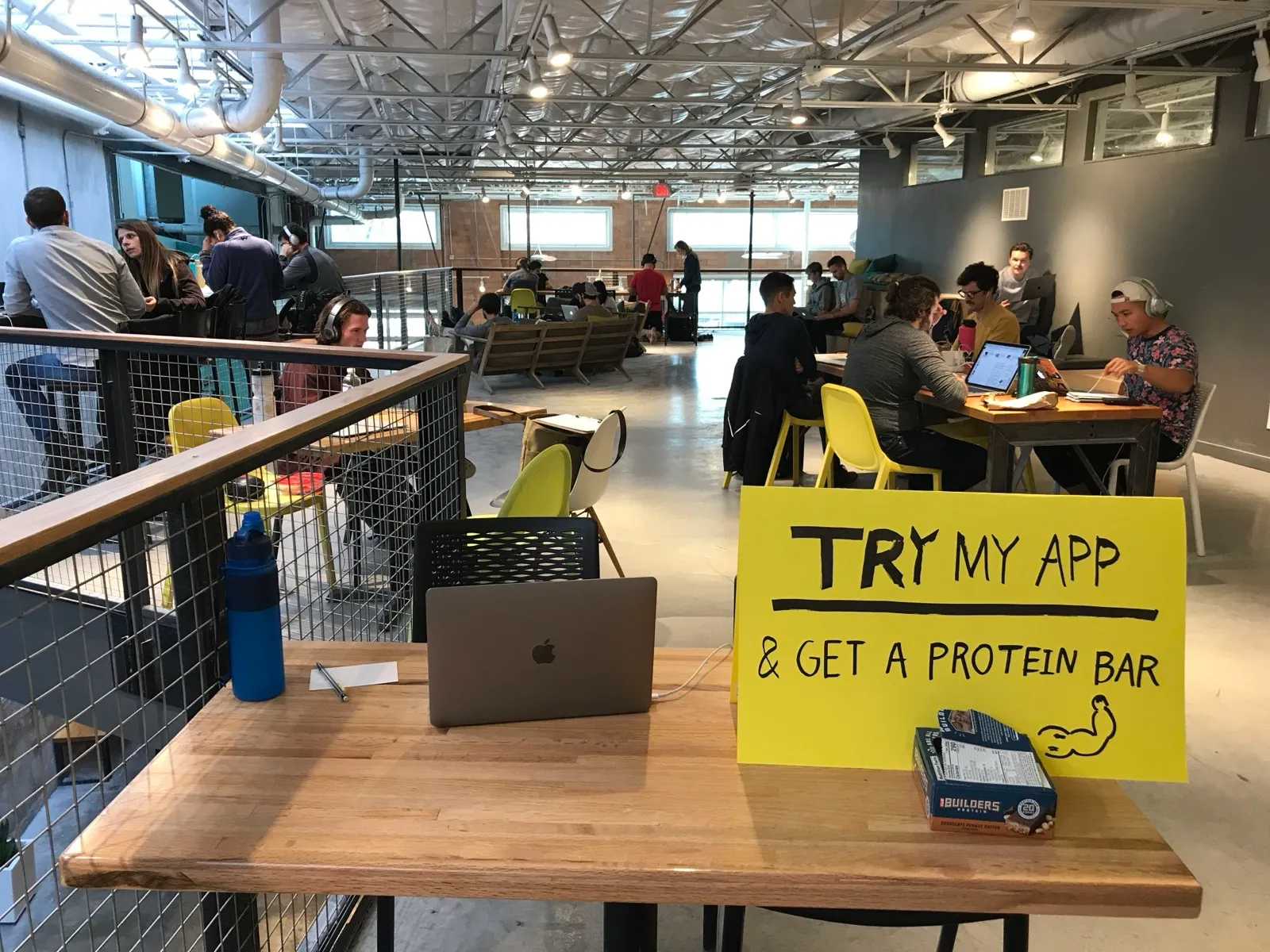
A few days ago, I set up a guerrilla operation to get strangers to try out Hide Feed, a Chrome extension that I’ve been developing. I wasn’t sure what would happen, but I was very pleased with the results — I had no trouble getting people to try my product, and most importantly, I learned about critical usability and product messaging issues I had missed and what I could do to fix them. Today, I’ll focus on how you can recruit people for your own user tests to get crucial feedback for your product.
When it comes to getting test volunteers, the most important thing is to know your target audience. Hopefully, you’ve already thought about who your target audience is when developing your product. In my case, I know the people who would get the most out of Hide Feed are knowledge workers who value how they spend their time and attention. If I had to come up with a specific persona to represent my ideal user, it would be a software engineer who meditates and tries to be thoughtful of their relationship to technology. If that sounds like I’m just describing myself, well, surprise! I built Hide Feed for myself and figured there are other people out there who would enjoy using it as well.
If you don’t consider beforehand who you want testing your app, you could run your user tests perfectly but end up with useless information. Being clear about your target audience makes the whole recruiting process easier because it helps you recruit at the right place, offer the right goodies, and get feedback from the right people.
Recruit at the right place
I currently live in Austin, Texas, and my life revolves around a place called Austin Bouldering Project (ABP). It’s the dopest facility that includes bouldering walls, a yoga studio, saunas, and a weight room. It also has a co-working space upstairs that’s frequented by lots of people who work on their laptops. It’s where I’ve spent most of my time working on Hide Feed and other projects. Given the people I’ve met there, I knew that it was the perfect place to find people in my target audience.
If I didn’t consider my target audience beforehand, I could’ve made the mistake of setting up my poster in the parts of ABP that got the most foot traffic. While that might sound like a good idea to maximize my chances of finding testers, I would’ve ended up talking to lots of people who would’ve had zero interest in my product. Limiting my scope to people from the co-working space allowed me to filter my testers to the kind of folks who spend a lot of time working on their laptops. It wouldn’t be helpful to get feedback from someone who barely spent any time on their computer.
Offer the right goodies
Once you’ve chosen where to recruit your testers, you need to find a way to get people to talk to you. It’s not like everyone’s going to be rolling up saying, “Man, I have absolutely nothing better to do with my time than to sit and talk with you about your pet project.” (This does happen from time to time — I had some really nice people come and participate without wanting anything in return.)
Thankfully, it shouldn’t take anything crazy or expensive to encourage people to stop by. For example, if you’re posted up at a Starbucks, just offer to buy people a cup of coffee. In my case, I had it easy. Several months ago, I saw someone running user tests in the ABP co-working space. He mentioned that he regretted his decision to offer donuts as an incentive because people weren’t stopping by. While donuts probably would’ve worked in most places, he had forgotten that people go to gyms to get fit, not to get fat. Armed with the advice from my predecessor, I bought protein bars instead, and they worked extremely well: I never had to wait more than 5-10 minutes between finishing a user testing session and having someone approach me to give Hide Feed a try.
Get feedback from the right people
Even if you recruit at the right place, you still might get volunteers who aren’t a good fit. One way you can make sure you’re getting feedback from the right people is to ask screener questions. Large companies have the luxury of selecting their test volunteers by looking at their answers to extensive surveys — for indie makers, you’ll have to come up with a quick and simple set of questions that will do the job. For every person who stopped to try my extension, I started off by chatting for a bit to make them feel comfortable and then asked them the same set of questions:
- How many hours a day do you spend on your laptop on average?
- Which of these websites do you use multiple times a day? (YouTube, Facebook, Amazon, Gmail, Twitter, LinkedIn)
If they told me that they barely spent any time on their laptop or that they didn’t use any of the listed websites, I wouldn’t have continued with the user test because I wouldn’t know whether their feedback has more to do with issues in my product or the fact that they’re not someone who would use my product in the first place.
Make sure you don’t go overboard and be overly selective in your screening. I ended up talking to people who I wouldn’t have considered my “ideal user”, but they still helped me discover usability issues and learn about use cases that I hadn’t thought of before. Use a filter that’s narrow enough to filter out people who are obviously not a good fit but broad enough to still capture a diverse set of folks.
When you decide to get strangers to try out your product, make sure you take the time to be thoughtful about who you want testing your product. Talking to the right people will help you get the most useful feedback and make sure that your time is well spent — you don’t want to prepare a bunch only to realize that offering donuts at a gym probably wasn’t the best idea.