Day 87: Intention Privacy Policy
As much I love Firefox and their privacy-first focus, developing extensions on Chrome currently provides a better developer experience than on Firefox. I won’t get into the details here, but there are several gotchas and strange bugs that have made Firefox development a pain in the butt sometimes.
Despite that, there’s one area where building extensions for Firefox really shines: their review process. In contrast to Chrome’s review process where you’re not sure whether you’re dealing with an AI built with training data comprised solely of Comcast customer service transcripts, you actually get a real person providing real feedback.
With Firefox’s review process, it’s clear that there are real people trying out the extensions and looking at the source code to make sure that there’s nothing nefarious going on.
The most recent release of Intention includes Sentry, an error monitoring service that tells me what errors users are running into. Here’s an example of what one of those errors looks like:

Clicking into it shows me more information about the error and the user’s context:
Screenshot
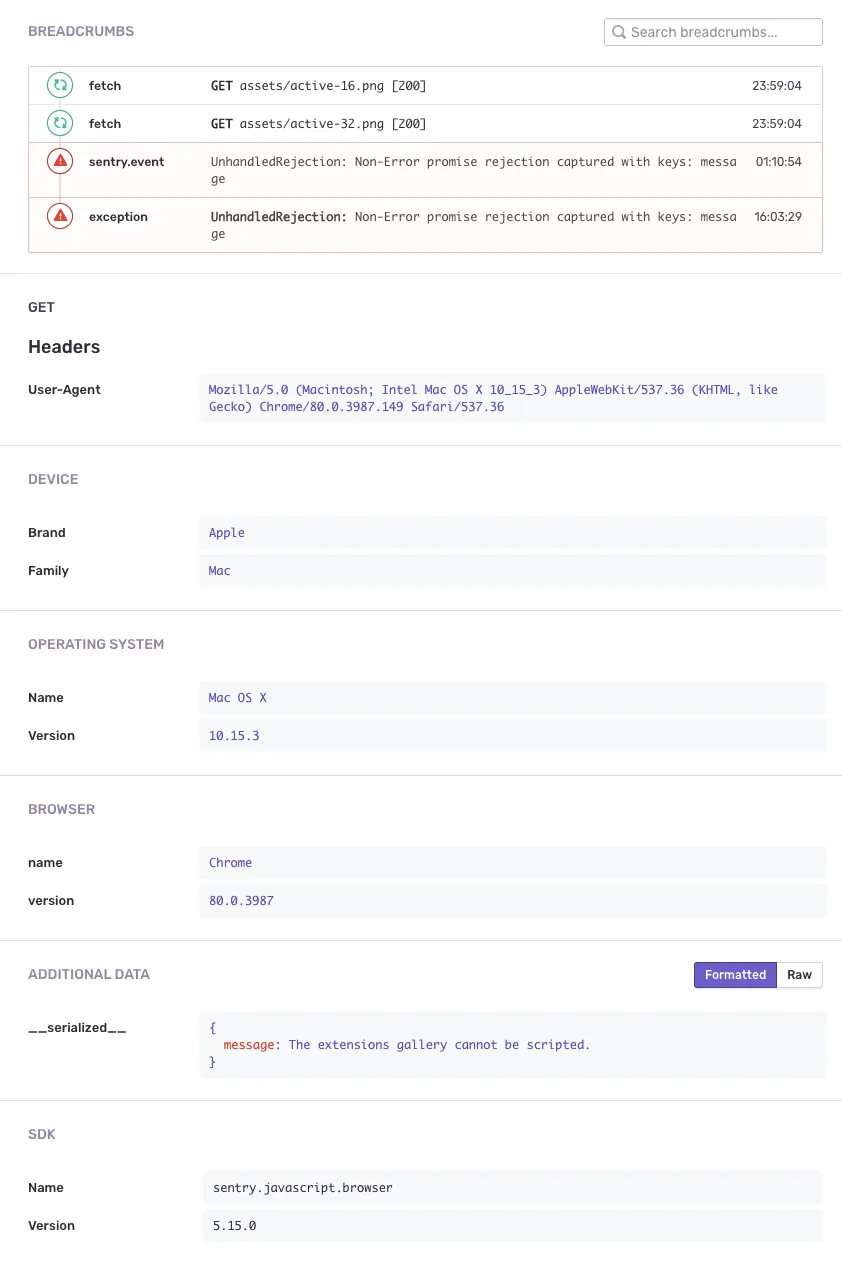
(Pro tips if you use Sentry: in the settings, you can enable “Enhanced Privacy” to limit PII in email notifications and “Prevent Storing of IP Addresses” to avoid storing IP addresses.)
Today, I got an email that a reviewer found an issue with the latest submission of Intention. Here’s what they requested:
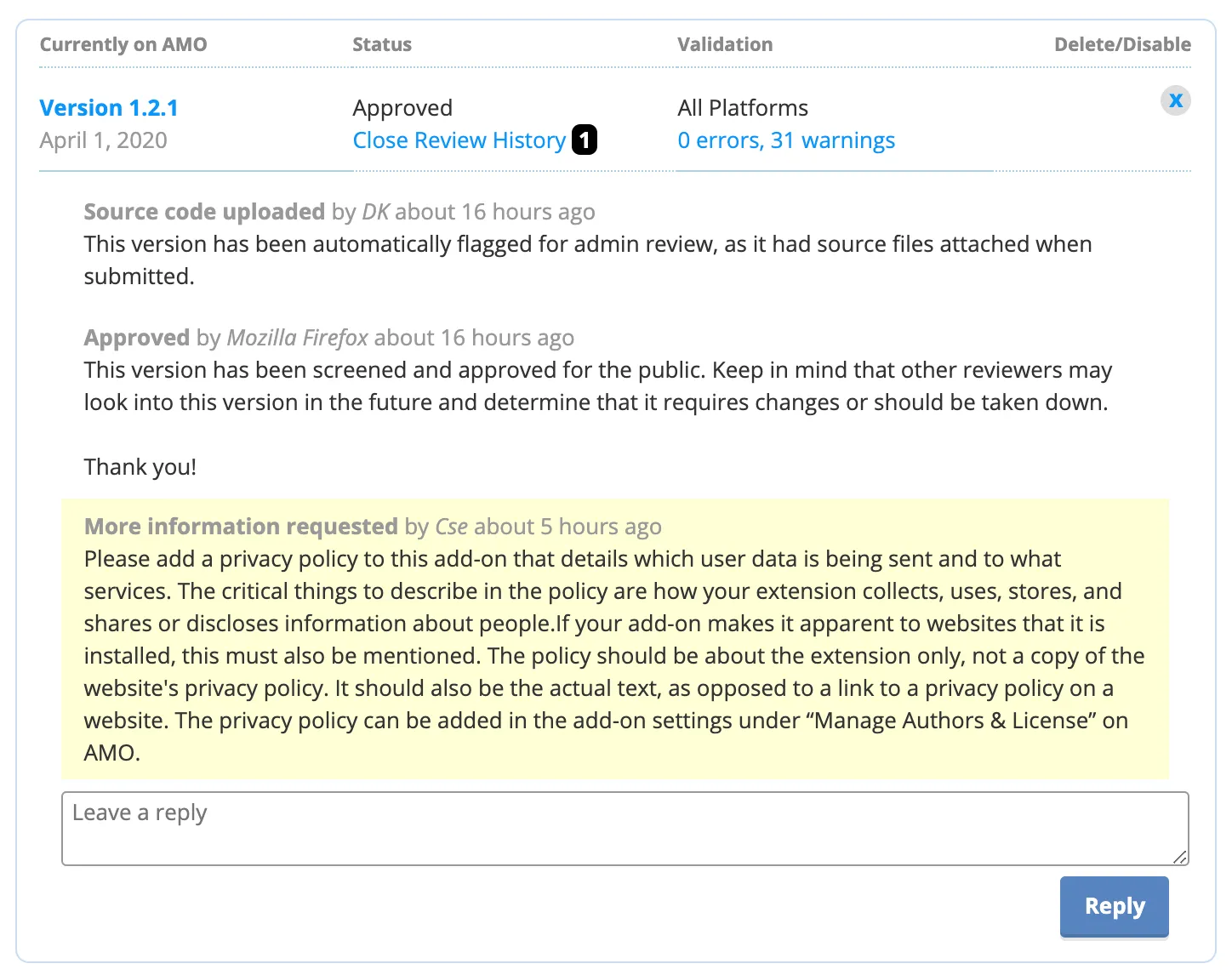
Usually having a reviewer flag issues in my extensions is a cause for concern, but this one was wholly welcomed. It’s awesome that they are rigorous in protecting users’ data.
In the past, I didn’t have a need for a privacy policy because no data was transmitted from users’ computers, but now that there’s crash reporting and the ability to create accounts and join groups, it’s about time I come up with one.
I’ve always appreciated privacy policies that are simple and readable by normal people, so I’m going to do the same.
Here are links to some privacy policies that I’ve been looking at:
- The big boys: Google, Reddit, Twitter, Facebook
- Toggl, Loom (examples of privacy policies that are NOT in plain English)
- Stratechery
- Basecamp, Mailbrew (love how personal it feels)
- Inbox When Ready (love the short version, long version structure)
I’m fairly tempted to copy someone else’s privacy policy as a skeleton to avoid a lot of the boilerplate (and I may do so in the future), but I’m going to start off by writing this mainly from scratch to try to keep it as simple as possible.
My goal for my privacy policy is for people to understand exactly how their data is used and hopefully trust that it’s being stewarded in a thoughtful way.
Intention Privacy Policy
I take your privacy seriously and am committed to keeping your data secure. If you have any questions about this policy, email me at dk@getintention.com
What data is collected and why
-
Name and email address
If you sign up for an account, your name and email address is used to create your account.
-
Extension usage data
By default, all extension usage data is stored locally on your computer and is not transmitted anywhere. If you sign up for an account, the following information is collected on a regular basis to share with members of your groups:
- Your daily browsing limit
- Time spent browsing distracting sites today
-
Extension error data
Diagnostic data about your system (e.g. device, operating system, browser) is reported when Intention encounters an error to help identify and fix issues. You can opt-out from the “Privacy” section of the extension settings.
Services
Intention uses third-party services to provide its service: