Day 284: Minimalist Running
Junior high.
I’m pretty chubby. I start running at the park up the hill from my house which I’d dubbed “dog poop park” because there was so much of it everywhere. My friend Josh, who lives up the street from me and is even closer to the park, runs with me sometimes. As with everything else we did together, we were competitive about who could run longer and faster.
Thanks to the running, I’m less chubby. Puberty probably helped, too.
Sophomore year of high school.
I need to get back down to 119 pounds to make weight for wrestling so I put on all the sweatshirts I can find and run around the neighborhood under the scorching heat. I sweat like crazy. I make weight at the meet.
Junior year of college.
I’m chubby again. Actually, kind of fat. A box of Papa John’s poking out of my trash can reveals my lovely eating habits. I decide to start running.
I run on the treadmills at the gym and push myself hard. I get shin splints pretty much immediately. I stop running.
Not fat. But I went on a run with my housemates back in Santa Cruz and realized just how bad my cardiovascular health is. I’ve always preferred strength training and yoga to cardio, and in the rare moments when I do cardio, I prefer high-intensity interval training to distance running. Honestly, running long distances seems like a great way to abuse your body and hurt yourself. I mean, something’s clearly not right when apparently 30 to 75 percent of runners get injured every year.
When I arrive at my parents’ place and decide to get some exercise, I decide to run around the neighborhood like I did over ten years ago. I struggle and it feels like my heart’s going to give out, but I finish without resorting to walking. I’m proud of myself but know there’s work to do.
I start finding opportunities to run. Shiva and I jog to the beach and back in Santa Cruz. Michael and I run on a nearby trail in Rancho Santa Margarita, and afterwards, he doesn’t believe me when I tell him that this is only around my third time running in years. I’m not fast, but my mental game is strong so I’m able to keep going even when the going gets tough.
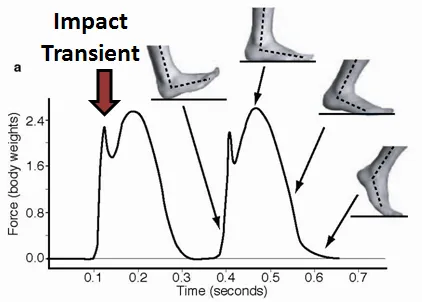
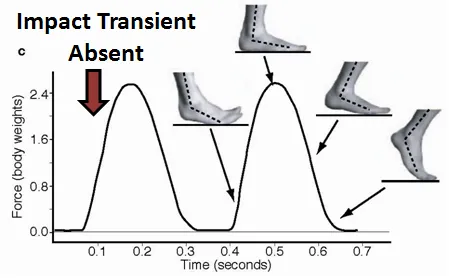
A month later, I’m on a Pal’s birthday Zoom call where he off-handedly mentions how a podcast he listens to just came out with an episode on minimalist shoes and running injuries. The idea behind the barefoot running movement, which spawned an industry of minimalist shoes, is that modern running shoes promote poor form which leads to injury. The extra cushioning in the heel encourages landing on your heel which leads to a much sharper increase in force compared to landing on your forefoot or midfoot.
Heel striking (source):
Forefoot striking (source):
While there’s still a ton of debate over whether heel striking necessarily leads to more injuries than forefoot striking, I’m down to give it a try. The idea of adapting my running form to make running barefoot more comfortable appeals to my minimalist sensibilities. Unlike years ago when I first looked into barefoot running, I pull the trigger and buy a pair of highly-rated minimalist shoes on sale on REI.
I’d read that you need to ease into using minimalist shoes because it takes time for your muscles to adapt to the change in form. I decide to walk around a bit in the shoes without running to try them out. The difference is immediately noticeable: I can feel every rock underneath my foot in the gravel driveway. Sometimes, one of those rocks juts into my arch which hurts. I’m not thrilled about the pain but stoked on the idea of my feet becoming tougher and stronger.
The first time I run, I jog for about 5 minutes. The shoes makes a huge difference in the way that I run — heel striking leads to sore heels very, very quickly, so I force myself to switch to forefoot striking even though it feels awkward. I finish the jog with tired heels and calves.
A few days later, I run for about 10 minutes. Then 15 minutes. Then my housemate joins and we run for about 20 minutes. I’m surprised by how much I’m enjoying it. The combination of the open fields out here, where you can see cows and sheep straight chilling, and the runner’s high feels amazing.
Yesterday, I went running again for about 20 minutes, and my calves started feeling a bit tight halfway into it. Thinking that I was just making them stronger, I continued running and even completed the steep hill leading back to the house without stopping. And then I realized that wasn’t a normal level of soreness — my calves felt like solid bricks lodged inside my legs. Soon, I had to resort to limping because of the pain. I had made the mistake that every barefoot running resource recommended against: trying to do too much, too fast.
Here are the tips for transitioning to forefoot/midfoot striking that I should’ve heeded:
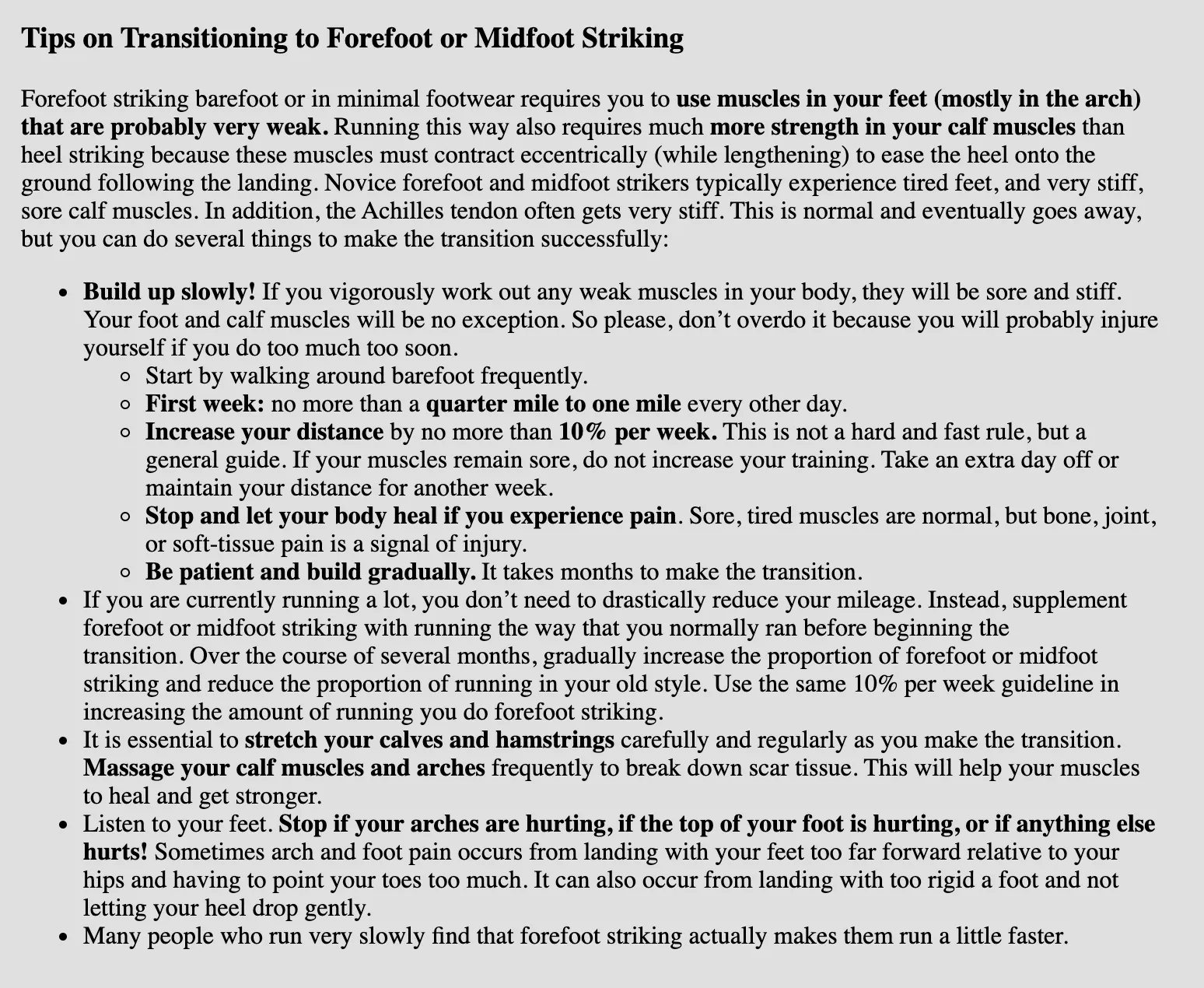
It recommends using a general guide of not doing more than 0.25 to 1 mile of running every other day and increasing by no more than 10% per week. Here’s what following the guidelines would look like if you started off with 1 mile:
- Week 1: 1 mile
- Week 2: 1.1 miles
- Week 3: 1.21 miles
- Week 4: 1.33 miles
- Week 5: 1.46 miles
- Week 6: 1.61 miles
- Week 7: 1.77 miles
- Week 8: 1.95 miles
- Week 9: 2.14 miles
In other words, you’re supposed to take a minimum 2 months to work up from 1 mile to 2 miles. I tried to do that in like 2 weeks, so it’s no wonder that I wrecked my calves.
Even though I’m still limping around the house, thankfully a lot of the pain subsided overnight. Although I’m pretty excited to get back out there (wow, never thought I’d feel excited about running), I’m going to take it easy-breezy and let my legs fully recover before going running again.
Takeaways:
- Consider changing to forefoot or midfoot striking to potentially mitigate chances of injury
- Don’t be an idiot like me and injure yourself trying to minimize injury — take it slow!